
Difference Between Water and Gas Teflon Tape

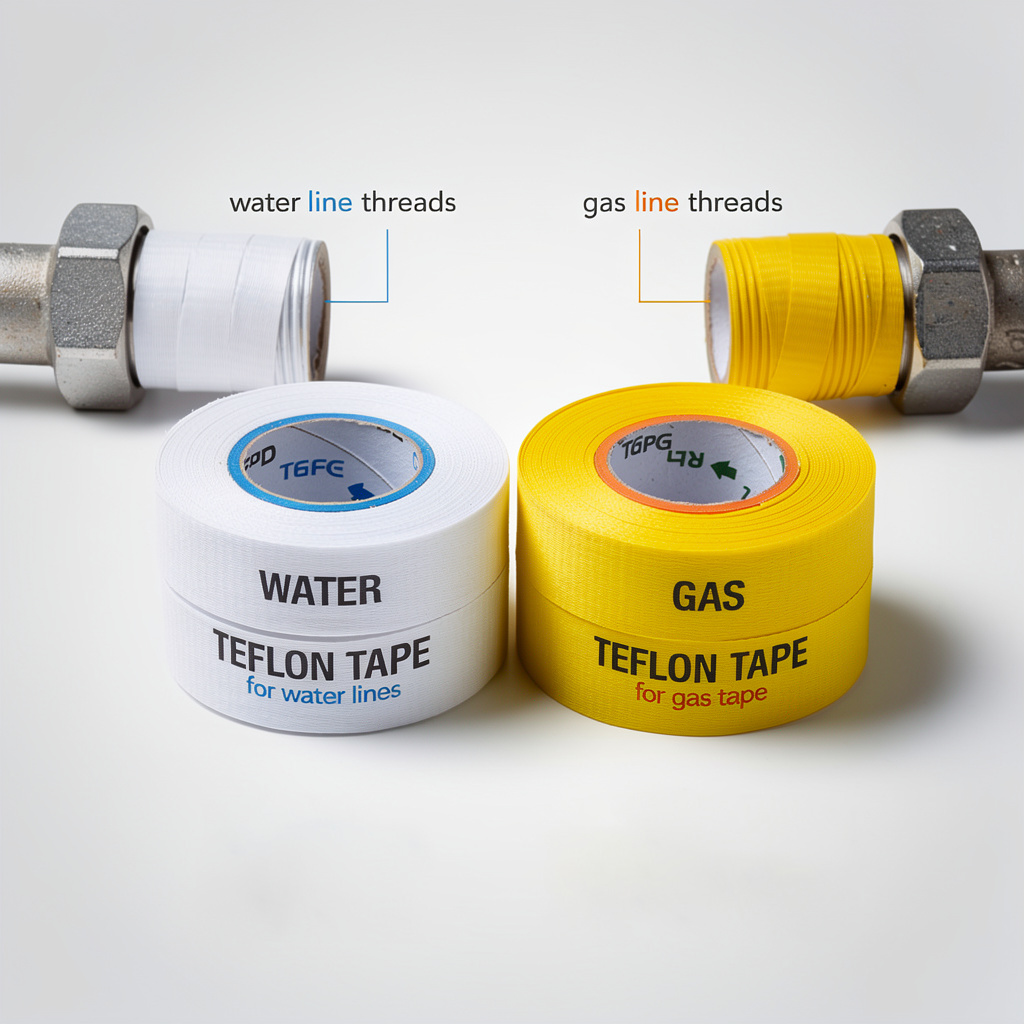
Teflon tape, also known as PTFE (Polytetrafluoroethylene) tape or plumber’s tape, is widely used in plumbing and gas systems to seal threaded pipe connections. Although water and gas Teflon tapes may look similar, they are designed for different purposes and have important differences in thickness, strength, color, and safety standards. Understanding these differences is essential for safe and reliable installations.
What Is Teflon Tape?
Teflon tape is a thin, flexible sealing tape made from PTFE material. It is wrapped around threaded pipe fittings to:
- Prevent leaks
- Improve sealing performance
- Reduce friction when tightening
- Protect threads from corrosion
Because of its chemical resistance and durability, PTFE tape is suitable for many industrial and household applications.
Teflon Tape for Water Systems
Characteristics
Teflon tape used for water plumbing is mainly designed for cold and hot water pipes in residential and commercial buildings.
Key features include:
- Color: Usually white
- Thickness: Thin to medium
- Density: Standard
- Pressure Resistance: Moderate
- Temperature Resistance: Suitable for common water temperatures
Applications
Water Teflon tape is commonly used for:
- Faucets and taps
- Shower connections
- Sink and toilet fittings
- Household water pipes
- Irrigation systems
Advantages
- Easy to apply
- Low cost
- Suitable for most water systems
- Widely available
Limitations
- Not ideal for high-pressure gas systems
- May tear easily under strong tightening
- Not certified for gas safety in many regions
Teflon Tape for Gas Systems
Characteristics
Gas Teflon tape is specially manufactured to handle gas pressure and prevent dangerous leaks.
Key features include:
- Color: Usually yellow (sometimes pink)
- Thickness: Thicker than water tape
- Density: High
- Pressure Resistance: High
- Temperature Resistance: Designed for gas environments
Applications
Gas Teflon tape is used in:
- Natural gas pipelines
- LPG systems
- Residential gas stoves
- Heaters and boilers
- Industrial gas installations
Advantages
- Strong sealing performance
- High resistance to pressure
- Reduced risk of gas leakage
- Meets safety regulations in many countries
Limitations
- More expensive than water tape
- Slightly harder to apply due to thickness
- Not always necessary for low-pressure water systems
Key Differences Between Water and Gas Teflon Tape
| Feature | Water Teflon Tape | Gas Teflon Tape |
| Color | White | Yellow / Pink |
| Thickness | Thin to Medium | Thick |
| Density | Standard | High |
| Pressure Resistance | Moderate | High |
| Main Use | Water Plumbing | Gas Systems |
| Safety Certification | Usually Not Required | Often Required |
Safety Considerations
Using the correct type of Teflon tape is critical for safety, especially in gas installations.
Important points:
- Never use standard white water tape for gas lines unless it is specifically certified for gas.
- Gas leaks can cause fire, explosions, and serious health risks.
- Always follow local building codes and safety regulations.
- For professional installations, certified gas sealants may be required in addition to PTFE tape.
Proper Application Method
To ensure effective sealing, follow these steps:
- Clean the threads from dirt and oil.
- Wrap the tape clockwise (in the direction of tightening).
- Apply 3–6 layers, depending on tape thickness.
- Press the tape firmly into the threads.
- Tighten the fitting securely.
For gas systems, always test the connection for leaks after installation using soapy water or professional testing equipment.
Conclusion
Although water and gas Teflon tapes are made from the same PTFE material, they are designed for different levels of pressure and safety requirements. Water Teflon tape is suitable for general plumbing, while gas Teflon tape is thicker, stronger, and certified for high-risk gas systems.
Using the correct tape improves performance, prevents leaks, and ensures user safety. Therefore, selecting the right Teflon tape for each application is an important step in any plumbing or gas installation project.