
How to Choose the Right Teflon Tape for Different Climates in the UAE

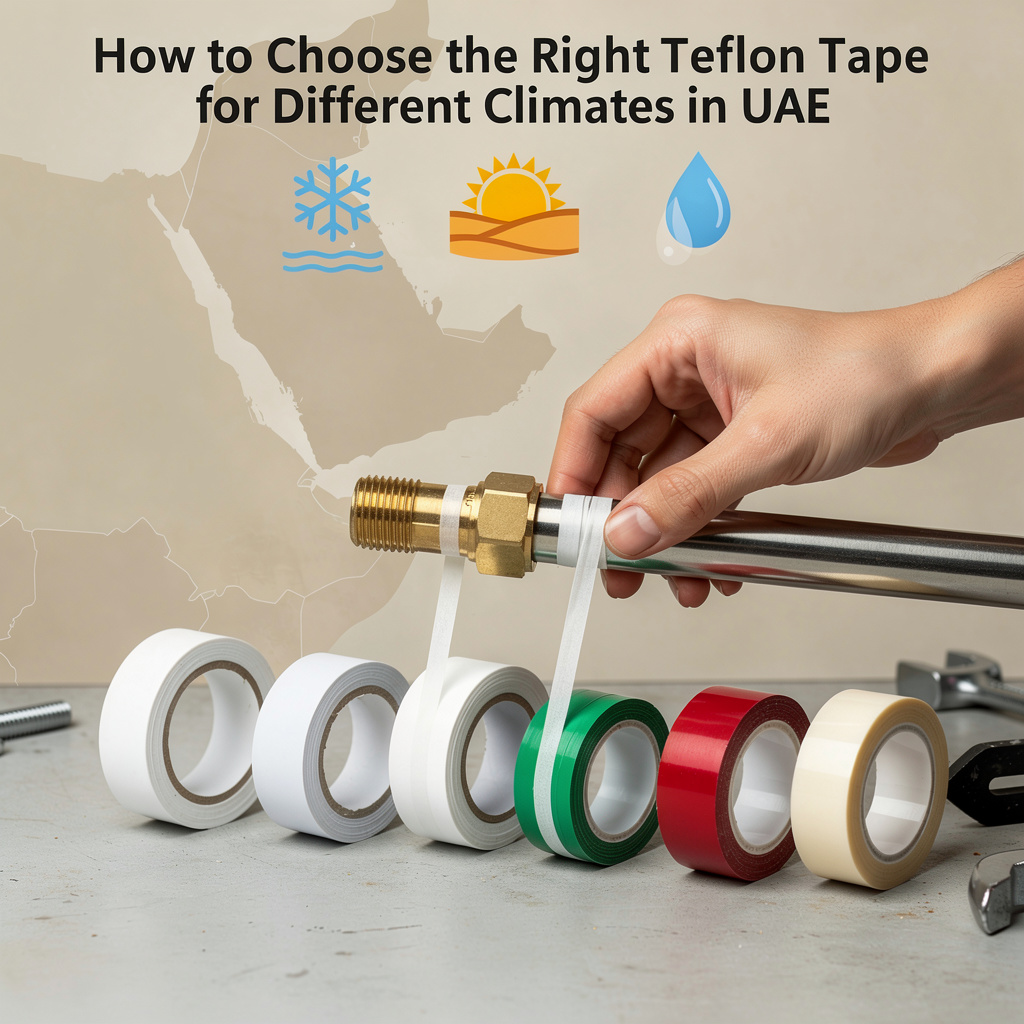
The United Arab Emirates has a unique climate characterized by extreme heat, high humidity in coastal areas, and frequent dust exposure. These environmental conditions can directly affect plumbing systems and pipe connections. Choosing the right Teflon tape (PTFE thread seal tape) is essential to ensure long-lasting, leak-free performance.
This guide explains how to select the proper Teflon tape for different climate conditions across the UAE.
Understanding UAE Climate Conditions
Before selecting Teflon tape, it is important to consider the environmental factors that influence pipe sealing performance:
-
High Temperatures
Summer temperatures in the UAE can exceed 50°C. Continuous exposure to heat may cause low-quality PTFE tape to degrade, shrink, or lose sealing strength.
-
Coastal Humidity
Cities such as Dubai, Abu Dhabi, and Sharjah experience high humidity levels. Moisture increases the risk of corrosion on metal threads, especially in outdoor installations.
-
Dust and Sand
Frequent dust storms and airborne sand can contaminate threaded fittings, preventing proper sealing if surfaces are not cleaned before application.
Types of Teflon Tape and Their Applications
Not all PTFE tapes are the same. Each type is designed for specific pressure, temperature, and application requirements.
-
Standard White PTFE Tape
Best for:
- Low-pressure water systems
- Indoor plumbing connections
- Faucets and shower heads
Standard white PTFE tape is suitable for general household water applications. However, in high-heat environments, it may wear out faster if exposed to constant outdoor temperatures.
-
Heavy-Duty (High-Density) PTFE Tape
Best for:
- Outdoor plumbing
- High-pressure systems
- Hot water lines
- Industrial applications
Heavy-duty tape is thicker and more durable, making it ideal for UAE’s extreme heat. It offers better sealing strength and longer lifespan under thermal stress.
-
Yellow Gas-Rated PTFE Tape
Best for:
- Natural gas lines
- LPG connections
- Gas appliances
Yellow PTFE tape is thicker and specifically certified for gas applications. It provides a safer, tighter seal for combustible gases. Always ensure installations comply with local UAE safety regulations.
-
Pink or Professional-Grade PTFE Tape
Best for:
- Commercial plumbing
- High-pressure water systems
- Stainless steel and brass fittings
Professional-grade tape is denser and designed for demanding environments. It performs well in humid coastal areas and resists thread damage during installation.
Choosing Based on Location in the UAE
Inland Areas (Desert Climate)
- Extremely high heat
- Lower humidity
Recommended: Heavy-duty PTFE tape for outdoor use; standard tape for indoor systems.
Coastal Areas (Dubai, Abu Dhabi, Sharjah)
- High humidity
- Salt exposure
Recommended: High-density or professional-grade PTFE tape to resist corrosion and moisture effects.
Industrial Zones
- High pressure systems
- Chemical exposure
Recommended: Industrial-grade or specialty PTFE tape designed for chemical resistance.
Additional Selection Tips
- Check Temperature Rating: Ensure the tape can withstand high temperatures (at least 120–260°C depending on application).
- Verify Pressure Rating: High-pressure systems require thicker, denser tape.
- Clean Threads Before Application: Remove sand, rust, and debris.
- Wrap Correctly: Always wrap clockwise, 3–5 layers for water, 5–6 layers for gas.
- Avoid Over-Tightening: Excess force can damage fittings, especially in hot weather.
Conclusion
Selecting the right Teflon tape in the UAE is not just about choosing the first available option. Climate conditions—heat, humidity, and dust—play a significant role in seal durability and system safety.
For indoor residential plumbing, standard PTFE tape is usually sufficient. However, for outdoor, coastal, gas, or high-pressure systems, heavy-duty or certified gas-rated tape is strongly recommended.
By choosing the appropriate tape and applying it correctly, you can ensure reliable, leak-free performance even under the UAE’s demanding environmental conditions.