
How to Use Teflon Tape

Learn how to use Teflon tape correctly. Discover what Teflon tape is, its types, applications, and step-by-step instructions for water, gas, and oxygen systems.
What Is Teflon Tape?
Teflon tape, also known as PTFE tape or thread seal tape, is a thin, flexible tape made from polytetrafluoroethylene (PTFE). It is primarily used to seal threaded pipe connections to prevent leaks in plumbing, gas, air, and industrial systems.
Teflon tape works by filling microscopic gaps between male and female threads. This creates a tight seal that prevents liquids or gases from escaping while also allowing smoother tightening of fittings.
Due to its chemical resistance, high temperature tolerance, and non-reactive properties, Teflon tape is widely used in residential, commercial, and industrial applications.
What Types of Teflon Tape Are Available?
Teflon tape comes in several types, each designed for specific applications and safety requirements.
-
Water Teflon Tape (Standard PTFE Tape)
- Thin and lightweight
- Designed for low to medium pressure
- Commonly white in color
- Used in residential plumbing
-
Thick or High-Density Teflon Tape
- Higher density and thickness
- Provides stronger sealing
- Suitable for metal pipes and higher pressure systems
-
Gas Teflon Tape
- Thicker and denser than water tape
- Designed to meet gas safety standards
- Often yellow in color
- Used for natural gas and LPG systems
-
Oxygen Teflon Tape
- Made from high-purity PTFE
- Free from oil, grease, and contaminants
- Designed specifically for oxygen systems
- Usually white or green and clearly labeled
-
Industrial or Chemical-Grade Teflon Tape
- Resistant to chemicals, acids, and solvents
- Used in oil, gas, and chemical industries
What Are the Applications of Teflon Tape?
Teflon tape is used across many industries and systems, including:
- Water supply and plumbing systems
- Gas pipelines and appliances
- Oxygen and medical gas systems
- Compressed air lines
- Industrial machinery and piping
- Chemical and petrochemical facilities
Its versatility makes it an essential sealing material for threaded connections.
General Rules for Using Teflon Tape Correctly
Before looking at specific applications, there are some universal rules that apply to all types of Teflon tape:
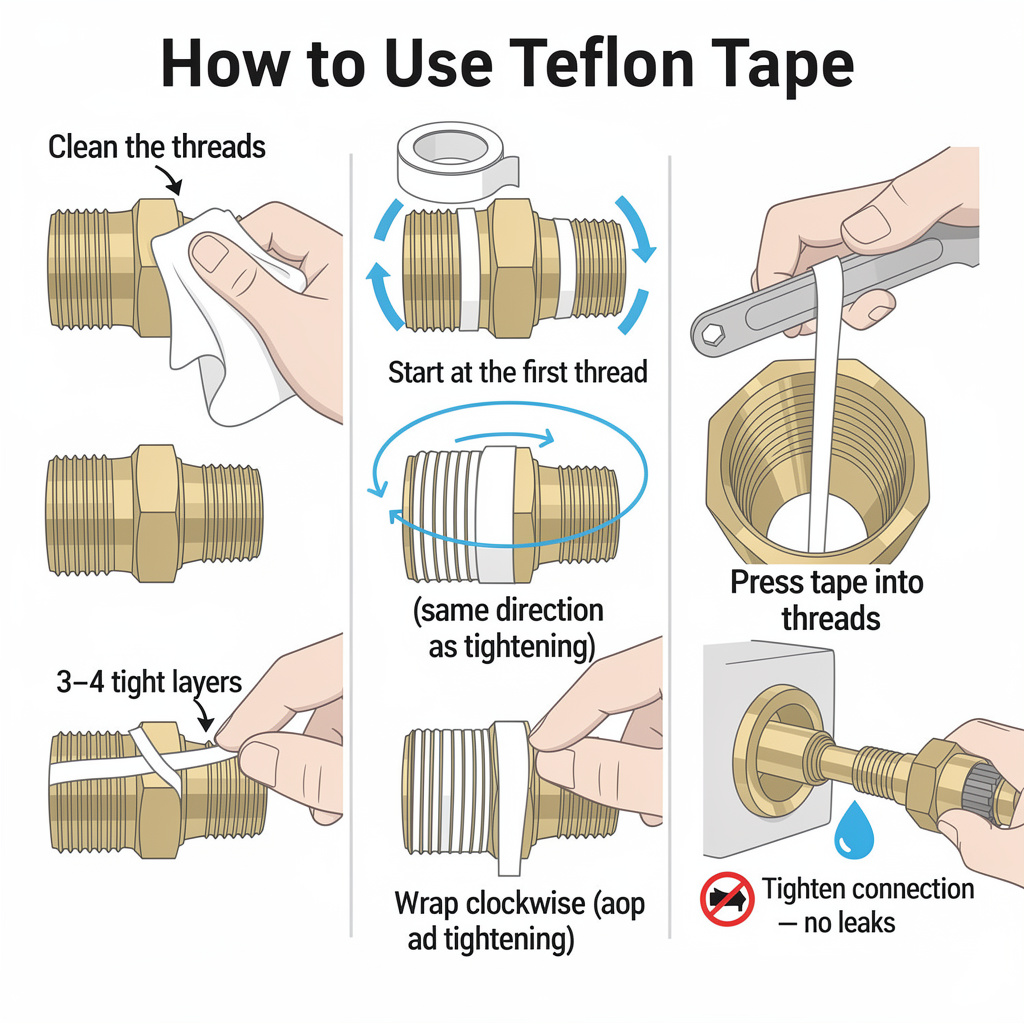
- Clean the threads thoroughly before applying tape
- Wrap the tape in the direction of the threads
- Do not overstretch the tape
- Use the correct number of wraps
- Keep tape from entering the inside of the pipe
Following these rules ensures a secure, leak-free connection.
0 to 100 How to Use Teflon Tape
How to Use Teflon Tape for Water Pipes
Water Teflon tape is commonly used in household and commercial plumbing systems.
Step-by-Step Instructions:
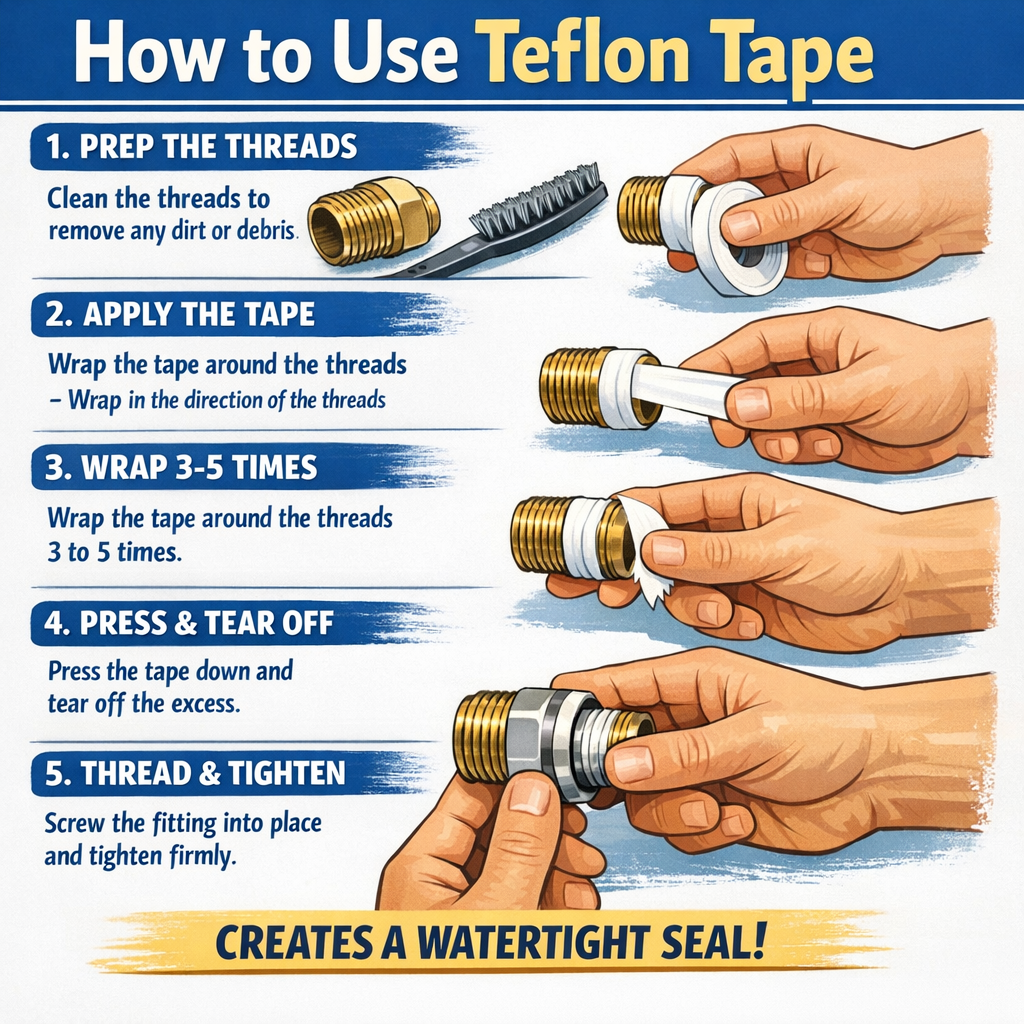
- Clean the male threads using a dry cloth
- Place the tape at the start of the threads
- Wrap the tape clockwise (same direction as tightening)
- Apply 5–10 wraps, depending on thread size
- Press the tape lightly into the threads
- Screw the fitting into place and tighten firmly
Tips:
- Do not use excessive tape, as it may prevent proper tightening
- Ensure the tape is smooth and not folded
How to Use Teflon Tape for Gas Pipes
Gas systems require extra care because even a small leak can be dangerous.
Important Safety Note:
Never use water Teflon tape for gas applications.
Step-by-Step Instructions:
- Use only certified gas-grade Teflon tape
- Clean and dry the threads completely
- Wrap the tape tightly in the direction of the threads
- Apply 7–12 wraps for better sealing
- Tighten the fitting securely
- Perform a leak test using soapy water
Safety Tips:
- If a connection is loosened, remove old tape and reapply new tape
- Always follow local gas safety regulations
How to Use Teflon Tape for Oxygen Systems
Using Teflon tape in oxygen systems is highly specialized and requires strict cleanliness.
Why Oxygen Tape Is Special
Oxygen reacts violently with oils or grease under pressure. Using contaminated tape can cause fire or explosion.
Step-by-Step Instructions:
- Use oxygen-approved PTFE tape only
- Ensure threads are completely clean and oil-free
- Avoid touching the tape with greasy hands
- Wrap the tape carefully without stretching
- Apply a moderate number of wraps (usually 4–6)
- Tighten the fitting using proper torque
Critical Warning:
Never use standard or gas Teflon tape in oxygen systems.
Common Mistakes When Using Teflon Tape
Avoid these common errors to ensure safety and performance:
- Wrapping tape in the wrong direction
- Using the wrong type of tape
- Applying too much tape
- Reusing old tape
- Allowing tape to enter the pipe interior
Practical Examples of Teflon Tape Applications
Example 1: Installing a Kitchen Faucet
Water Teflon tape is applied to threaded connections to prevent leaks under the sink.
Example 2: Gas Heater Installation
Gas-grade Teflon tape ensures safe, leak-free connections in residential heating systems.
Example 3: Hospital Oxygen Pipeline
Oxygen-approved Teflon tape is used to seal high-pressure oxygen fittings safely.
Example 4: Air Compressor Connections
Teflon tape prevents air leaks and pressure loss in compressed air systems.
Example 5: Industrial Chemical Pipelines
Chemical-grade PTFE tape resists corrosion and chemical reactions.
Advantages of Using Teflon Tape
- Easy and fast to apply
- Prevents leaks effectively
- Improves joint durability
- Resistant to chemicals and heat
- Cost-effective sealing solution
Final Summary
Knowing how to use Teflon tape correctly is essential for safe and reliable pipe connections. The key factors are:
- Choosing the correct type of tape (water, gas, or oxygen)
- Applying it in the right direction
- Using the proper number of wraps
- Following safety standards
Proper use of Teflon tape not only prevents leaks but also enhances system safety, efficiency, and longevity.